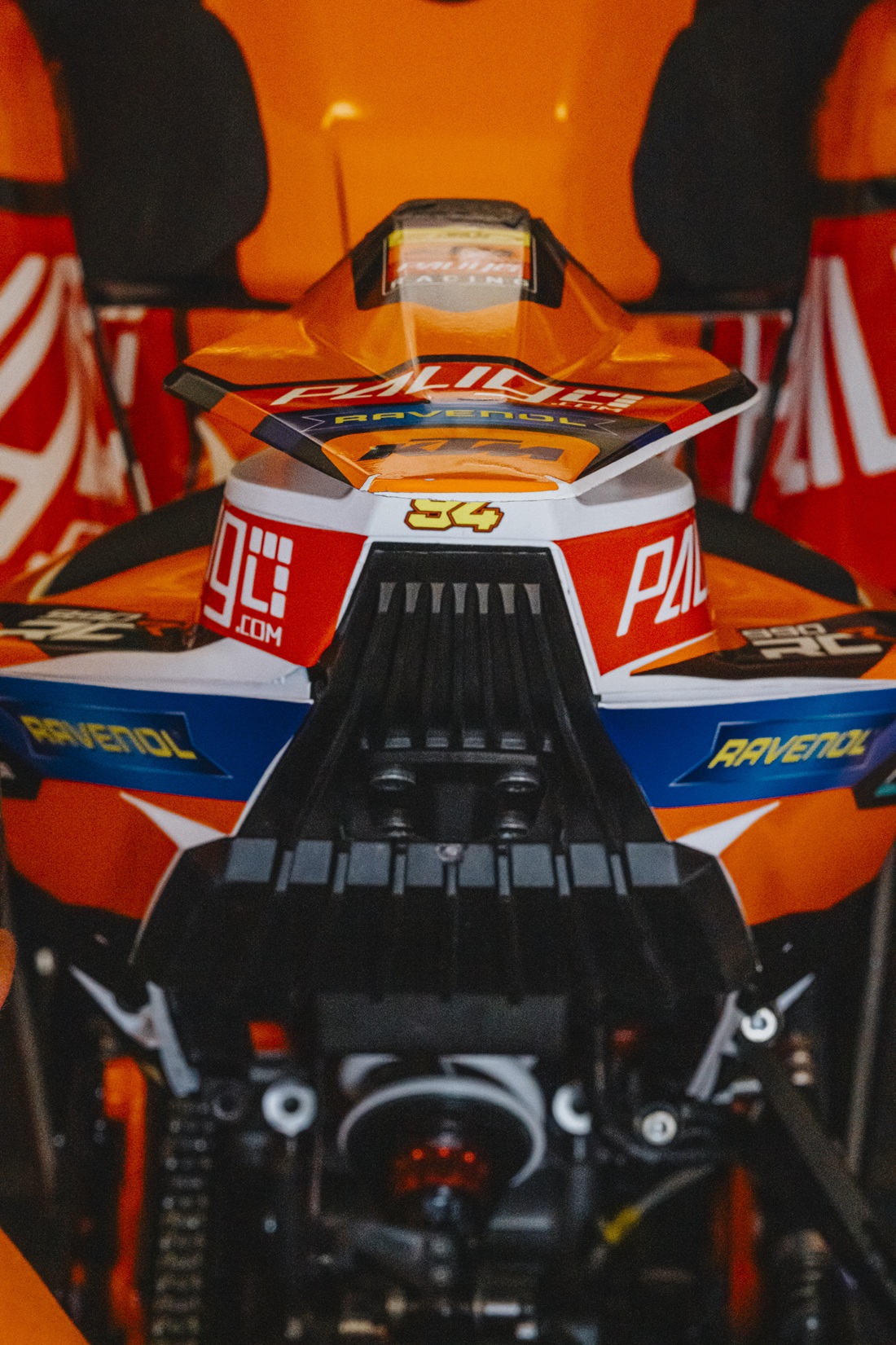
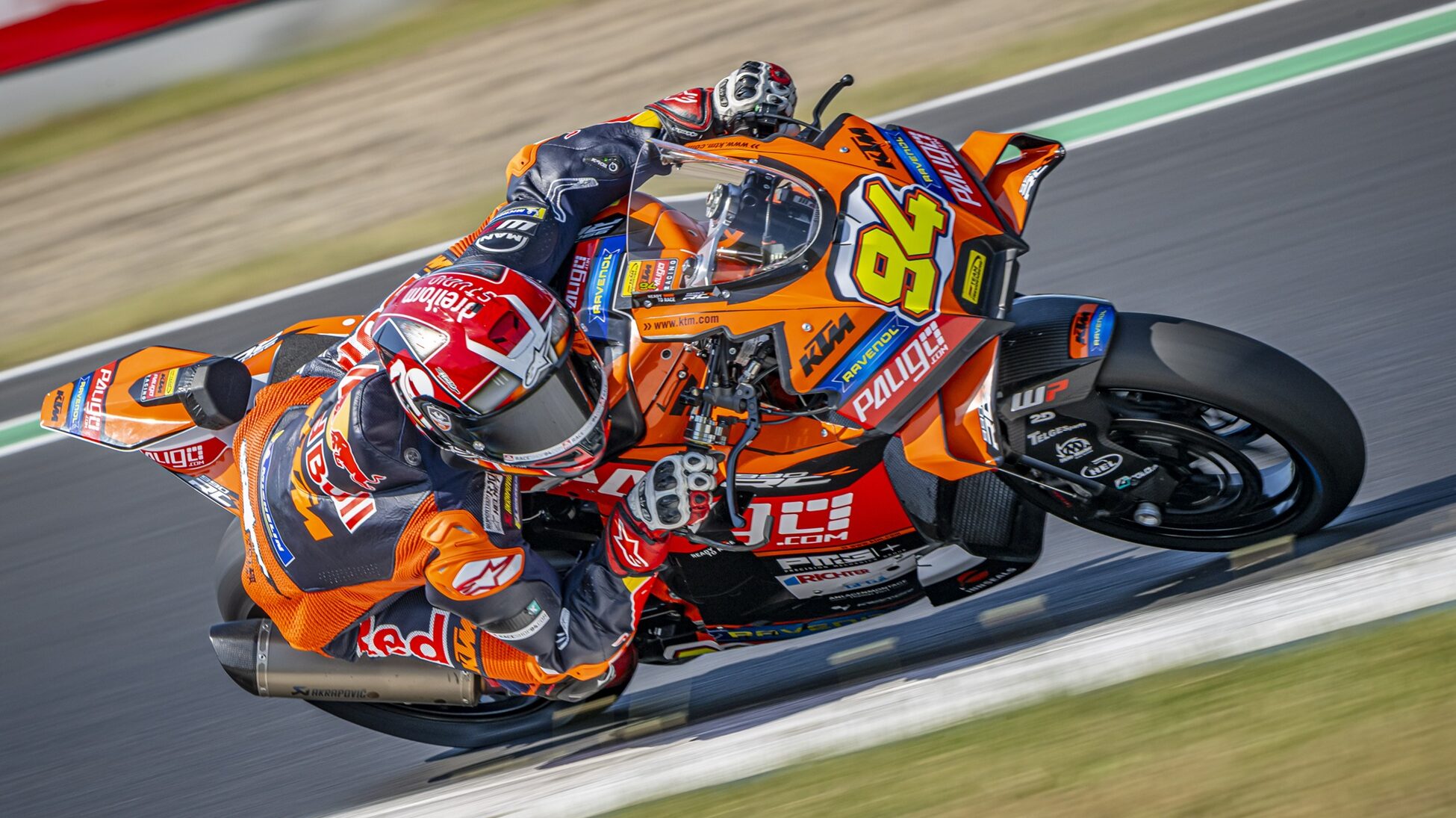
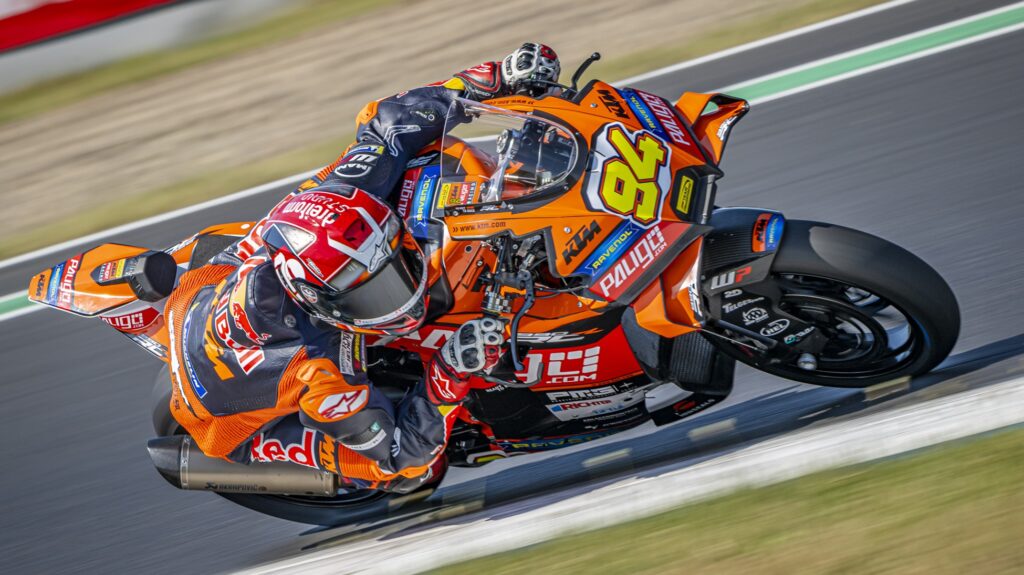
Former MotoGP star Jonas Folger made a last-minute appearance at the most recent EURO MOTO event in Most. As a guest and test rider, his job was to help further develop the KTM RC 990R for the Supersport. What’s next?
One thing is certain: Folger will also be on the starting grid for the EURO MOTO round from July 31 to August 2. The series will be making a guest appearance in Oschersleben during that time. KTM is moving forward with the Next Generation Bike project in collaboration with the German Freudenberg team. The team’s entry into the World Championship is planned for 2027.
“We need as many uninterrupted laps as possible. The EURO MOTO offers us exactly that opportunity,” team manager Carsten Freudenberg recently explained after facing challenging conditions at various track days on heavily trafficked tracks.
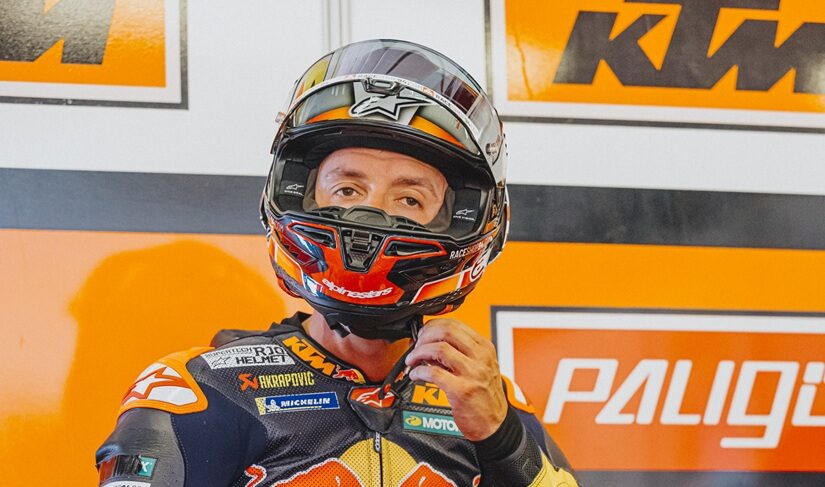
The clock is ticking. A race kit suitable for sale for the street-legal KTM RC 990R is expected to be available by the end of the year. It includes the chassis, linkage system, triple clamp, electronics, camshafts, exhaust, and oil cooler. This is the final step toward FIM homologation of the motorcycle. Currently, a power reduction and new balance rules for 2027 are under discussion. The KTM RC 990R, which is still in the development stage, has a power output of just under 145 PS—a deficit of just under 10 PS compared to current supersport bikes. “The goal is for KTM to return to the World Championship as part of the customer racing program,” says project manager André Klipphahn. The KTM RC 990R is subject to the FIM price cap of 26,400 euros. There will be no factory entry in the Supersport class in addition to the existing MotoGP program.
Folger, 32, was unable to finish the race in Most. The focus was on development anyway, rather than on a finishing position, “but those results would have provided us with further important insights. Now we’re missing that data, from which we could have learned,” says Folger. However, he would have expected to be further up the order overall. Folger finished seventh in the combined timesheets for free practice and qualifying, and was about 1.5 seconds behind the fastest time on both occasions.
The extreme heat actually worked in the team’s favor. “The conditions were a brutal test of endurance, with air temperatures reaching up to 40 degrees and over 60 degrees on the asphalt.” “This gave us a good sense of what needs to be improved in terms of the equipment. Aside from that, I had a blast being back in the championship and competing on the track against so many fast riders in this class. Most of them showed us where we stand and highlighted the areas where we need to improve or make changes.”