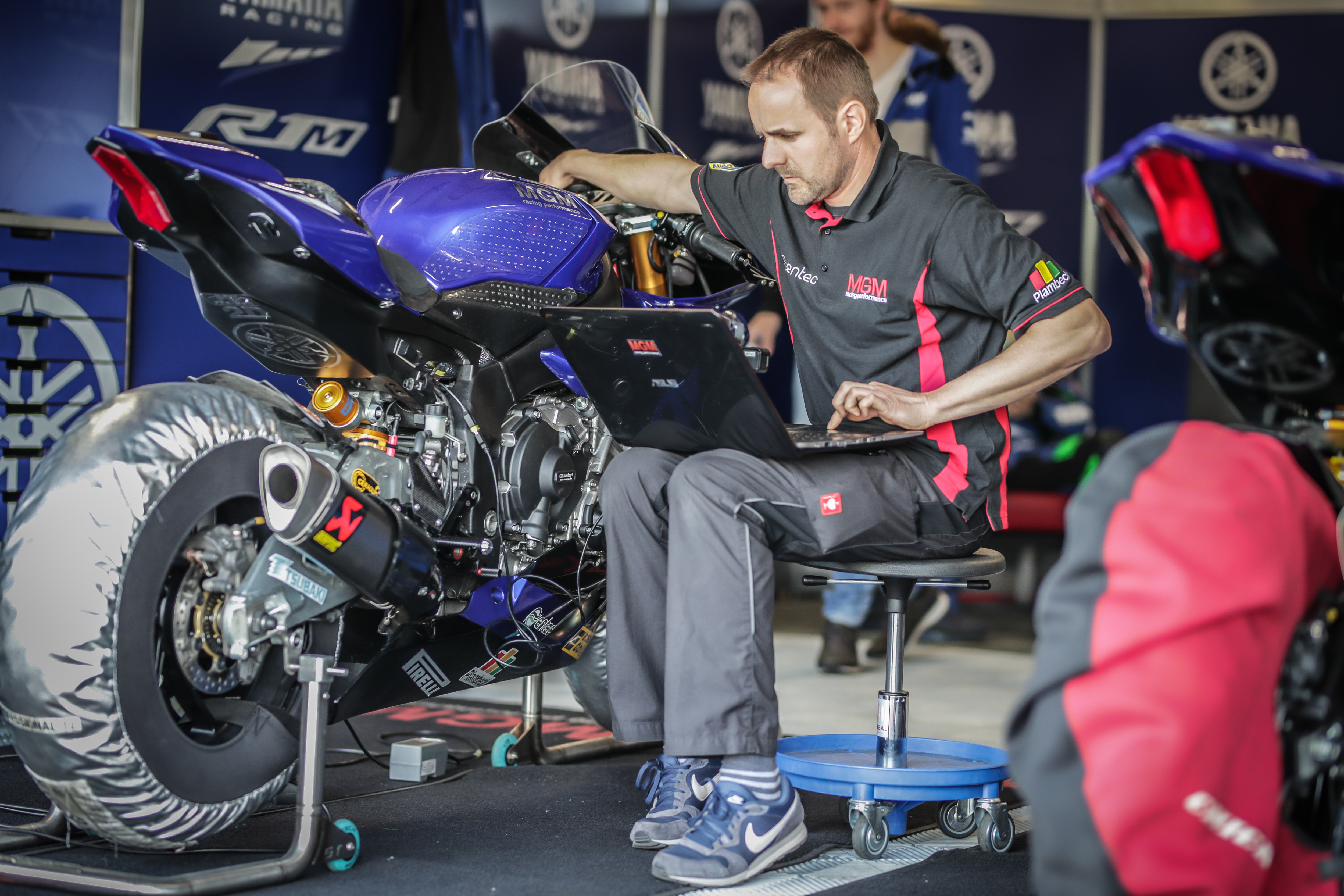
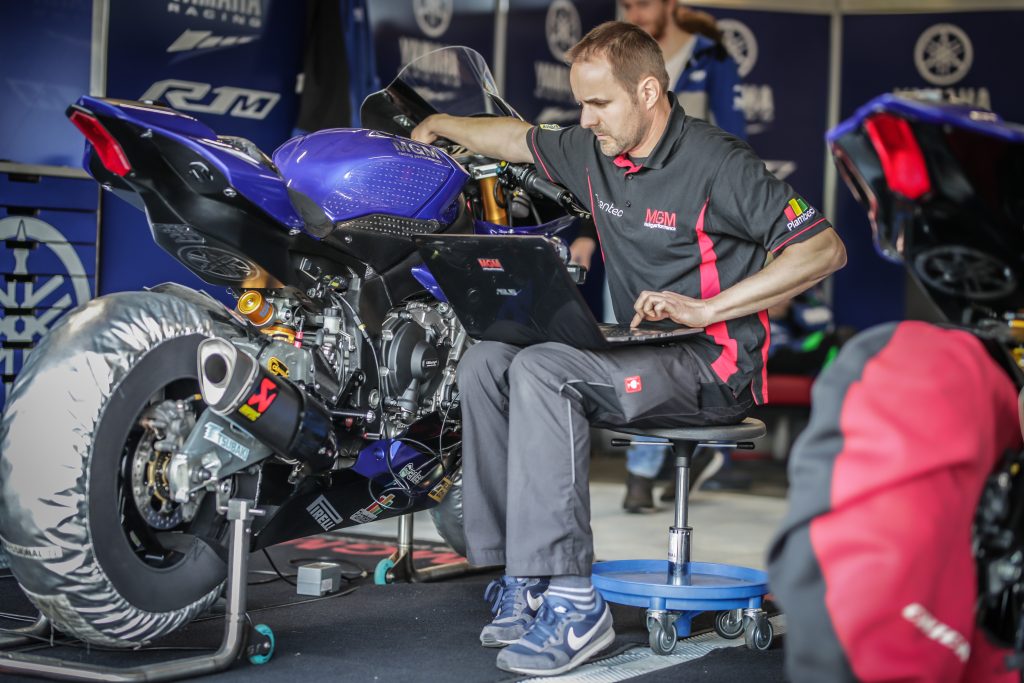
Everything had to be watertight. For this reason, the IDM technical team deliberately waited to publish the regulations for all IDM classes . They are now available online and can be downloaded at www.dmsb.de/active/motorradsport/strassensport.
There have been a few changes. In the IDM Superbike 1000 class, the team managers’ requests regarding the rev limit, radiators, and fairings have been addressed.
“We deliberately took so long to finalize the design so that we could incorporate the very latest maximum RPM figures from the Superbike World Championship for the Superbike class,” explains Karsten Bartschat, who serves as IDM Technical Director for the MOTORRAD action team—an in-house division of the promoter Motor Presse Stuttgart GmbH & Co. KG that organizes the IDM. “The latest data comes from the last WSBK race on April 14, 2019, in Assen. There were some changes there. Honda will be allowed to increase its engine speed by a few rpm to remain competitive with BMW, Kawasaki, Suzuki, and Yamaha,” Bartschat continues.
“In the IDM Supersport , we waited for the first two races in Europe—in Aragon and Assen—before the IDM regulations were announced. We wanted to see how the balance formulas designed to ensure a level playing field among the different motorcycle systems would hold up. The regulations are working exceptionally well. The 300s now seem to be well balanced.”
The goal of the IDM Technical Commission was and remains to take a clear stance so as to avoid having to make corrections too early.