
Marco, what was the core idea behind the Ninja ZX-4RR Cup—and now also with regard to the new ZX-6R Cup—and specifically, what gap in German and European motorsports were you aiming to fill with it?
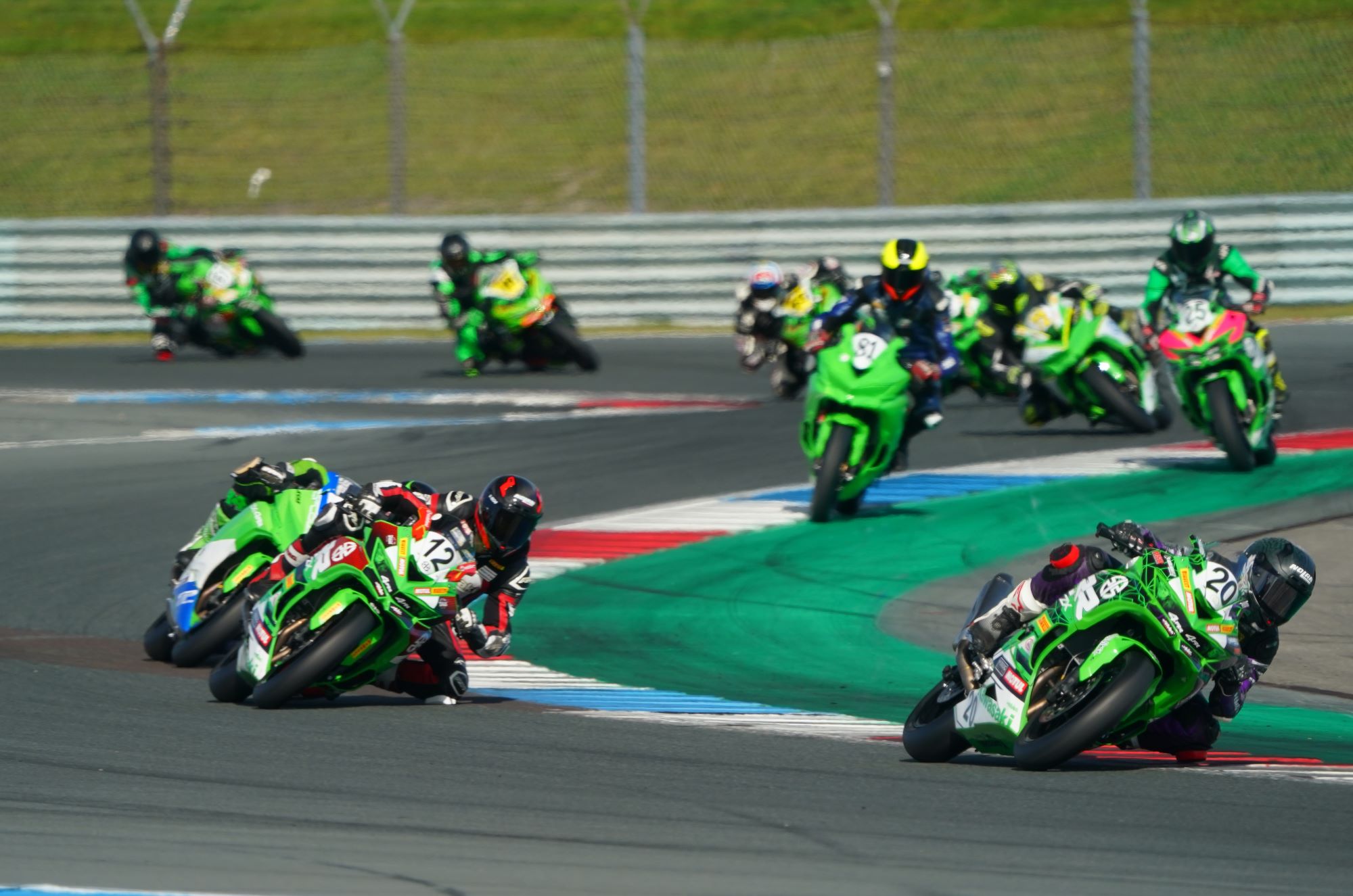
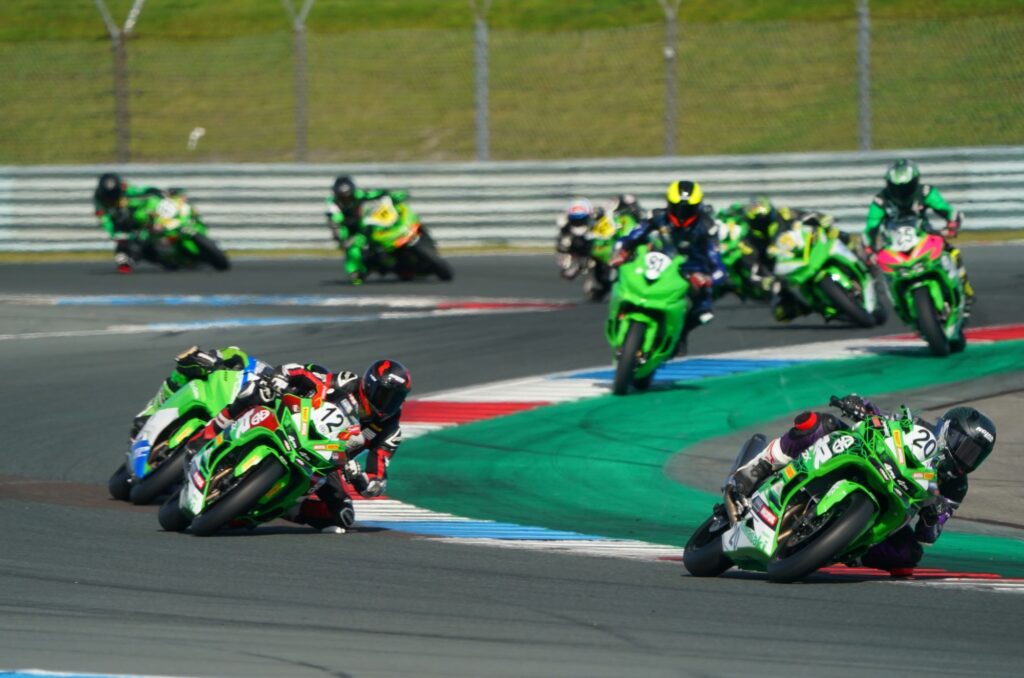
Marco Pascher: With the Ninja ZX-4RR Cup and now the new Ninja ZX-6R Cup, we wanted to bridge the gap for both young riders and ambitious amateur racers. With its inline four-cylinder engine and just under 80 hp, the Ninja ZX-4RR is the perfect bike for getting started in professional racing. It’s easy to handle, doesn’t overwhelm young riders, and at the same time, thanks to the four-cylinder engine, helps them develop high cornering speed. That’s exactly what’s crucial if you want to learn line selection, braking points, and how to ride on long-distance tracks.
The ZX-4RR is still often underestimated because of its 399cc engine. However, recent racing seasons have impressively demonstrated the lap times that can be achieved with this motorcycle. This makes the series not only suitable for up-and-coming talent, but also ideal for amateur racers who want to experience professional motorsports. This is how we attract new riders to the sport.
Thanks to its size and weight, the ZX-4RR provides the ideal foundation for the next step up to the Ninja ZX-6R. With the new ZX-6R Cup, Kawasaki is creating exactly this progression path while bridging the gap between the sportbike and Supersport classes. This creates a clearly structured progression path within the one-make cup concept.
The ZX-4RR Cup will enter its third year in 2026. How has the series developed so far, and what kind of riders does this cup attract?
Marco Pascher: The series is steadily gaining traction, especially among young riders. Many talented young riders are now specifically using the ZX-4RR Cup to gain their first experience in licensed racing and on major race tracks. This motorcycle is ideally suited for that very purpose because it instills a great deal of confidence while also challenging the rider’s skills.
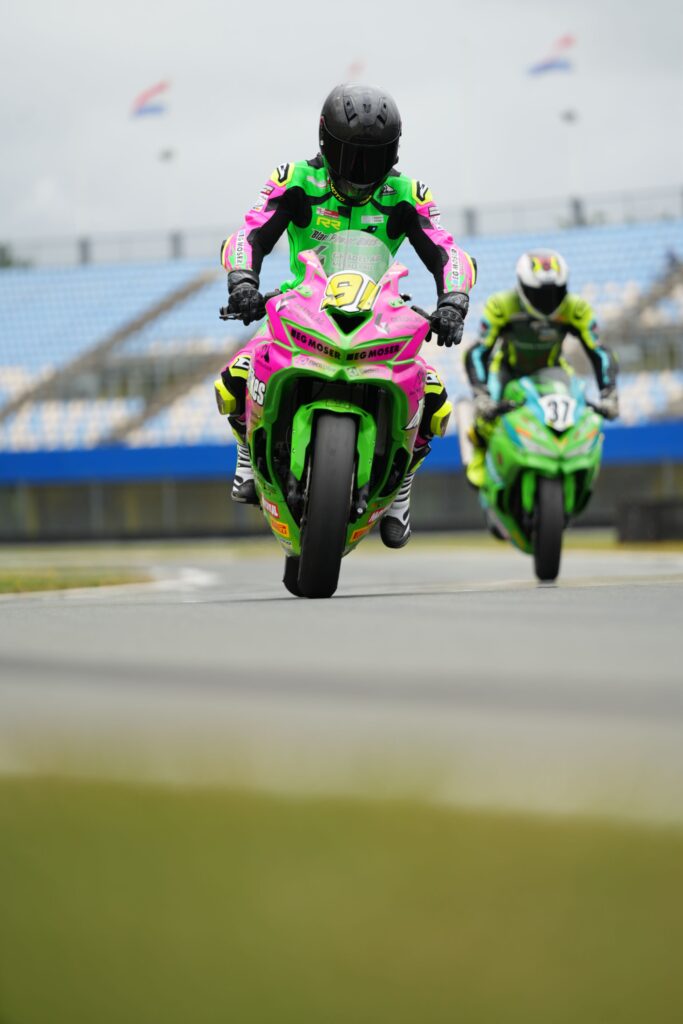
At the same time, however, we’re seeing more and more ambitious amateur racers joining the Cup. Many come from unlicensed events or track days and are looking to break into professionally organized motorsports. Anyone who’s ridden the ZX-4RR quickly understands why the bike is so much fun. The learning curve is incredibly steep, and that’s exactly what keeps many participants coming back.
Previous seasons have also shown that the level of competition in the field is very high and that the motorcycles have significantly more potential than many would initially expect. This makes the series appealing from a sporting perspective and ensures exciting races.
What sets your cups apart from traditional racing series?
Marco Pascher: One major difference is certainly the cost factor. Motorsports are inherently expensive, and many drivers struggle every year to secure funding for their season. This is exactly where we wanted to step in and create an attractive overall package that makes licensed motorsports possible even on a modest budget. Both cups are largely supported by Kawasaki so that we can offer this opportunity to participants in the first place.
Another important aspect is the atmosphere within the series. A very strong sense of community has developed, particularly in the ZX-4RR Cup. Of course, the competition on the track is fierce, but in the paddock, everyone works together. Riders help each other with line choices, braking points, or minor repairs. Many participants look forward to seeing their new friends again every weekend, both on and off the track.
This creates an atmosphere that makes it much easier for beginners in particular to get into racing and helps break down barriers.
What role does youth development play in your program, and how structured is the path to higher divisions?
Marco Pascher: Supporting young talent is a central part of our approach. We want to offer young drivers a professional platform at a reasonable cost and give them the opportunity to develop their skills on the track. It’s not just about results; it’s also about getting to know the circuits, gaining racing experience, and improving their driving skills step by step.
The Ninja ZX-4RR is the perfect tool for this, as it is particularly effective at honing riding technique and cornering speed. Riders who are fast on this bike often have a very clean riding style. That is exactly what lays the foundation for the next steps up to higher classes.
We are, of course, particularly pleased when drivers from our cups go on to compete in other championships or classes and achieve success there. That is exactly why we want to lay a solid foundation.
Motorsports is still considered an expensive endeavor: How do you manage to keep the barriers to entry low while still offering professional racing?
Marco Pascher: From the very beginning, it was important to us to develop a concept that would allow as many riders as possible to get started. That’s why we’ve opted for a very predictable package with manageable costs. Thanks to Kawasaki’s support, we can offer participants attractive terms that are often difficult to achieve in traditional racing.
In addition, both the Ninja ZX-4RR and the Ninja ZX-6R are built to be close to production models and highly reliable. This reduces the technical complexity and keeps costs down. At the same time, riders get genuine race bikes that allow them to experience professional motorsports.
In fact, many participants from unlicensed events have taken the plunge into licensed racing as a result. This shows us that this concept works and is being embraced.
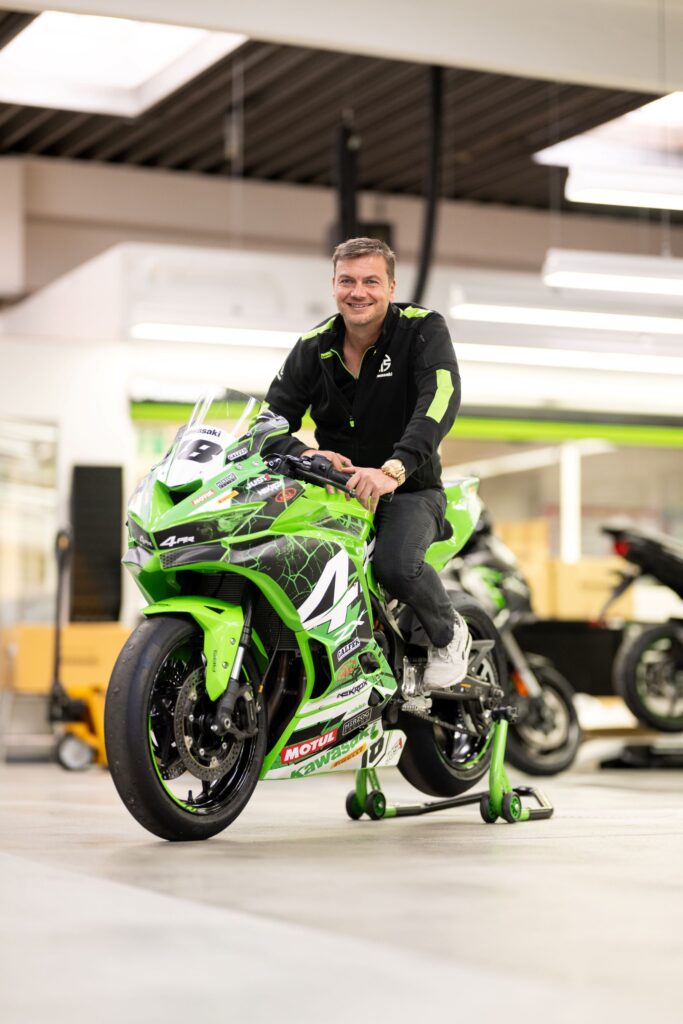
Is the Cup concept also a way to make motorsports more accessible again?
Marco Pascher: That is precisely one of our main goals. Over the past few years, we have helped many drivers from track day and amateur racing move into professional motorsports, while also introducing young talent to major circuits. In doing so, we are deliberately reaching out to a broad range of drivers.
With the Ninja ZX-4RR and now the Ninja ZX-6R, we have motorcycles that are both sporty and accessible. This allows us to cater to riders of all skill levels, from talented young riders to ambitious amateur racers.
We are therefore very much looking forward to the premiere of the Ninja ZX-6R Cup, as well as the season opener for both cups, which will take place May 8–10, 2026, at the Sachsenring.
If you'd like to learn more about the cups, you can find more information at the following two links:
Website: https://www.kawasaki.de/de_de/racing/
Instagram: https://www.instagram.com/kawasaki_ninja_cup_racing