(Please see the English version below)
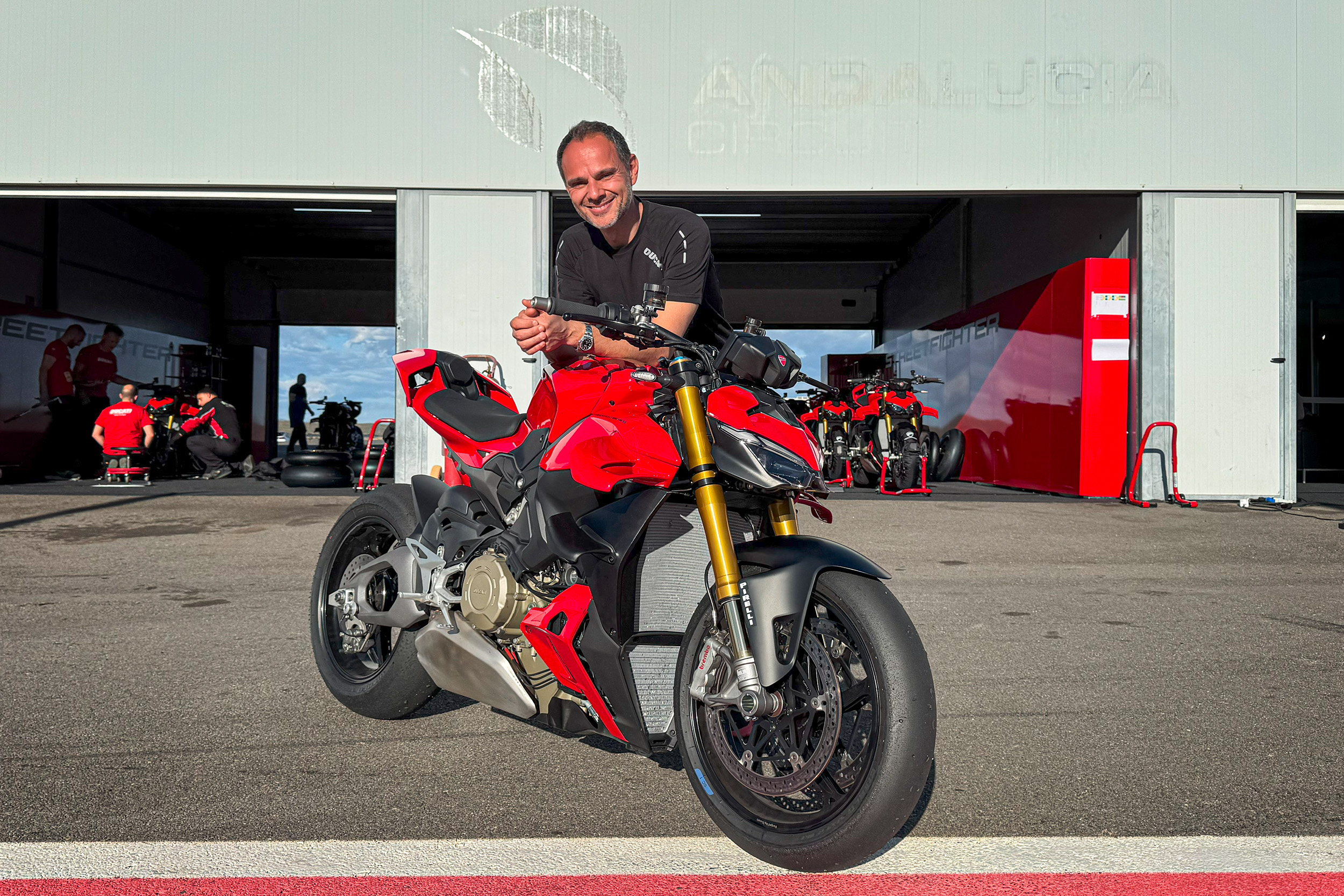
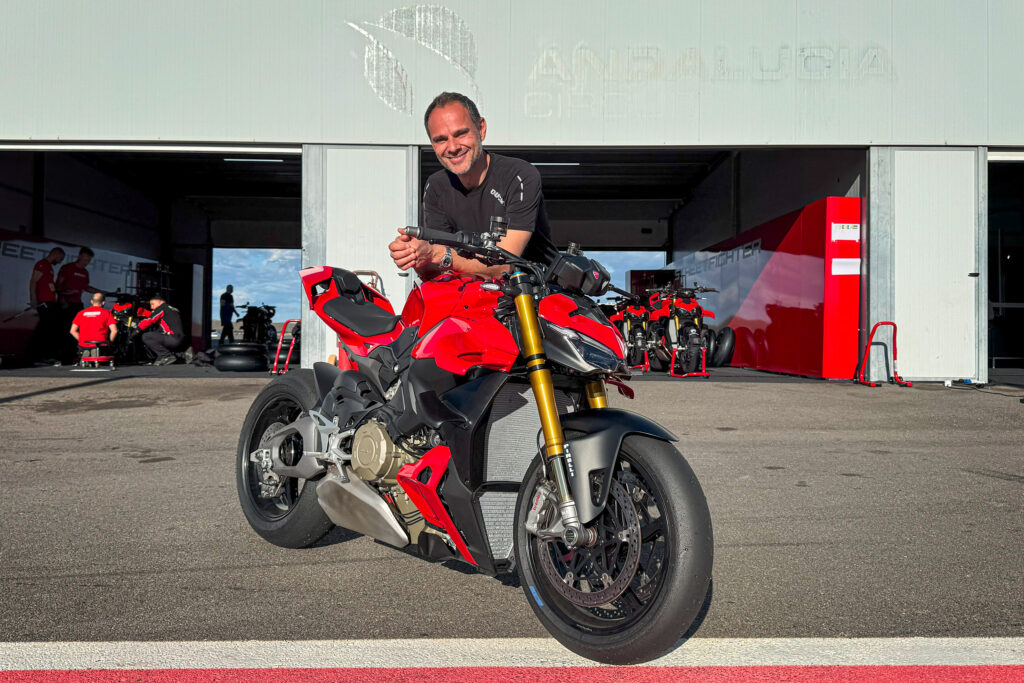
Although Ducati rider Lorenzo Zanetti won the 2024 season opener at the Sachsenring, the rest of the season did not go as the Italian had hoped. In this interview, Giulio Fabbri, Head of Product Communications at Ducati, explains where the challenges lay last year, how the team plans to approach things differently for the upcoming season, and how important the IDM is to Ducati as a manufacturer.
Giulio, what does the IDM mean to you as an Italian manufacturer?
The IDM—as well as other national championships—are very important to us. They raise our brand’s profile in the respective countries. But the IDM is particularly significant to us. One reason is the very high level of competition. If you win here, you know you can compete at the very top elsewhere, too. And of course, the fact that Ducati is part of Audi also plays a role—so it’s important for us to have a presence here.
Not only are you involved as a manufacturer, but you also have Lorenzo Zanetti—a former Italian champion—on your team, who is working on the Panigale V4 as a development rider. What was his feedback after his first IDM season?
I’ll be honest—I’m a huge fan of Lorenzo Zanetti. I’ve known him since he was riding pocket bikes at age six. We’re good friends, and he’s very open with me. He said, “Giulio, I never would have thought the level in the IDM would be this high.” You might just read the names and think, “Okay, maybe one of the riders is faster than the rest.” But when you actually compete, you realize right away: The competitive level is incredibly high. Lorenzo was surprised himself and quickly realized that we’re no longer competitive with a stock motorcycle like we were last year.
Lorenzo Zanetti races for Ducati Frankfurt on a German team, and this year he has another very strong rider by his side in Lukas Tulovic. How will Ducati react to Zanetti’s assessment—will there be support from Ducati Italy or from headquarters in Bologna?
Let me put it this way: yes and no. Officially, Ducati is directly involved only in MotoGP, the Superbike World Championship, and motocross. In the national championships, everything is organized by the local teams. In some countries, the respective national Ducati branch supports the teams with funding or through partnerships—but ultimately, the responsibility lies with the team itself. What sets Ducati apart from other manufacturers is this: If you’re a team and want to compete with Ducati, you can access the same technology we use in the World Superbike Championship. It just depends on your budget.
So there are no technical limitations—as long as you can afford it?
Exactly. But of course, every national championship has its own rules. In the Italian championship, for example, there’s a single supplier for electronics—just like in the BSB, where electronics aren’t allowed at all. That’s why we mainly support local teams in the area of electronics. On the other hand, though, you can basically buy from us exactly what Alvaro Bautista or Nicolò Bulega ride with.
And in Frankfurt, you have a team that performs at a very high level…
Absolutely. Ducati Frankfurt has a great team—the level of performance is really very high. Lorenzo isn’t just a rider; he’s also one of our official test riders for the Superbike World Championship. That means he can speak directly with the developers who build the WorldSBK bikes. He can provide feedback on whether, for example, changes to the chassis or electronics are needed for a specific track. We support the team—but as I said, our approach is different from that of other manufacturers, some of whom field full-fledged factory teams in national series. In the U.S., for example—we won the championship there for the first time in 30 years, and the team was organized entirely by Ducati New York. They bought the motorcycle, paid for it, and hired the riders. That’s how Ducati works.
So if you can afford it, you get genuine factory parts?
Exactly. If you want to—you can. It’s that simple. You get the best equipment. Last year, Josh Herrin won in the U.S. In the U.K., Tommy Bridewell won the BSB. And that’s exactly why the IDM is also particularly important to us.
And looking ahead to the upcoming season—what are your expectations?
If I had to give a diplomatic answer, I’d say: Let’s wait and see. But the truth is: Lorenzo Zanetti is a fighter. He wants the title. And he knows full well that the level of competition in the IDM is extremely high. There’s strong competition, some of which has significantly more factory support. But even in Italy, for example, Michele Pirro—our MotoGP test rider—rides for a private team. Ducati just takes a different approach. In the end, it’s up to the teams and riders. I think Lorenzo can win a lot of races. But they’re races—anything can happen.
Geographically speaking, the IDM tracks aren't actually that far from Bologna—unlike BSB or MotoAmerica. Will there be any official visits from Bologna?
We never announce things like this in advance. When someone shows up, they’re just standing in the pit. But fundamentally, Germany is extremely important to Ducati—it’s our second-largest market after Italy. We see great potential here. That’s why the IDM is so interesting to us. Ducati is a sports-oriented manufacturer with racing DNA. Although the Multistrada is our best-selling model here—as it is everywhere in the world—we are and will remain a sports brand. We don’t compete just to participate.
Thank you very much for the interview!
I'd be happy to. And one last thing: There are a few key people at Audi who are very interested in Ducati and are therefore following the action in the IDM very closely. That makes our presence in the IDM even more exciting (laughs).
(GB): Zanetti and Ducati are aiming for the title
Ducati rider Lorenzo Zanetti won the opening race of the 2024 season at the Sachsenring, but the rest of the year didn’t go as hoped for the Italian.
Giulio Fabbri, Head of Product Communications at Ducati, shared insights into the challenges they faced last season, what they plan to do differently moving forward, and why the IDM holds special importance for Ducati as a manufacturer.
Giulio, what does the IDM mean to you as an Italian manufacturer?
The IDM—and other national championships—are very important to us. They help increase our brand visibility in each country. But the IDM is especially significant for us. One reason is the very high level of competition. If you win here, you know you can compete at the top elsewhere too. And of course, it also matters that Ducati is part of Audi—so it’s important for us to have a presence here.
You’re not just a manufacturer, but you also have former Italian champion Lorenzo Zanetti as a rider on your team, who also works as a development rider on the Panigale V4. What was his feedback after his first IDM season?
I’ll be honest—I’m a big fan of Lorenzo Zanetti. I’ve known him since he was riding pocket bikes at the age of six. We’re good friends, and he’s very open with me. He said, “Giulio, I never expected the level of competition in the IDM to be this high.” You might just look at the names and think, “Okay, maybe one of the riders is faster than the rest.” But once you actually compete, you immediately realize: the level of competition is incredibly high. Lorenzo himself was surprised and quickly realized that we couldn’t be competitive anymore with a stock bike like the one we used last year.
Lorenzo Zanetti rides for the German Ducati team based in Frankfurt, and this year he’s joined by another very strong rider, Lukas Tulovic. How will Ducati respond to Zanetti’s assessment—will there be support from Ducati in Italy or the headquarters in Bologna?
Let’s put it this way: yes and no. Ducati is officially involved only in MotoGP, World Superbike, and motocross. In the national championships, everything is organized by the local teams. In some countries, the national Ducati branch supports the teams financially or through partners—but in general, the responsibility lies with the team itself. What sets Ducati apart from other manufacturers is that if you’re a team and want to race with Ducati, you can access the same technology we use in WorldSBK. It all depends on your budget.
So there are no technical limitations—if you can afford it?
Exactly. But of course, every national championship has its own rules. In the Italian championship, for example, there’s a designated electronics supplier—just like in BSB, where electronics aren’t allowed at all. So we mainly support local teams when it comes to electronics. But on the other hand, you can basically buy the exact same equipment that Alvaro Bautista or Nicolò Bulega uses.
And in Frankfurt, you have a team performing at a very high level…
Absolutely. Ducati Frankfurt runs a great team—the level is really high. Lorenzo isn’t just a rider; he’s also one of our official WorldSBK test riders. That means he can speak directly with the engineers who build the WorldSBK machines. He can provide feedback on whether a certain track requires changes to the chassis or electronics, for example. We support the team—but as I said, it’s different from other manufacturers, some of whom operate full factory teams in the national series. In the U.S., for example—we won the championship there for the first time in 30 years, and the team was entirely organized by Ducati New York. They bought the bike, paid for it, and hired the riders. That’s how Ducati works.
So if you can afford it, you get real factory-level equipment?
Exactly. If you want it—you can get it. It’s as simple as that. You get the best equipment. Last year, Josh Herrin won in the U.S. In the U.K., Tommy Bridewell won the BSB. And that’s exactly why the IDM is also particularly important to us.
Looking ahead to the upcoming season—what are your expectations?
If I had to give a diplomatic answer, I’d say: let’s wait and see. But the truth is: Lorenzo Zanetti is a fighter. He wants the title. And he knows very well just how high the level of competition is in the IDM. The competition is fierce, and sometimes teams have significantly more factory support. But even in Italy, for example, Michele Pirro—our MotoGP test rider—races for a private team. Ducati simply takes a different approach. Ultimately, it’s up to the teams and the riders. I believe Lorenzo can win a lot of races. But they’re races—anything can happen.
The IDM tracks aren’t geographically that far from Bologna—quite unlike the BSB or MotoAmerica. Will there be official visits from Bologna?
We never announce that in advance. If someone shows up, they’re just suddenly in the pit box. But fundamentally, Germany is extremely important to Ducati—it’s our second-largest market after Italy. We see great potential here. That’s why the IDM is so interesting to us. Ducati is a sporty brand with racing DNA. The Multistrada might be our best-selling model here—as it is everywhere in the world—but we are and remain a performance-oriented brand. We don’t race just to take part.
Thank you for the interview.
My pleasure. And one final note: there are a few key people at Audi who are very interested in Ducati and are following the IDM very closely. That makes our participation in the IDM even more exciting (laughs).